A video call freezes just as you are presenting to a client. A game update consumes the evening. Cloud backups slow every device in the house. These are the moments that make the fiber vs cable internet decision feel less like a technical detail and more like a daily productivity issue.
Both connection types can support streaming, remote work, online learning, and smart-home devices. But they deliver that experience differently. Fiber is built for high capacity and symmetrical performance, while cable remains widely available, capable, and often more affordable. The best choice depends on what is available at your address, how many people share the connection, and whether upload speed matters as much as download speed.
Fiber vs Cable Internet at a Glance
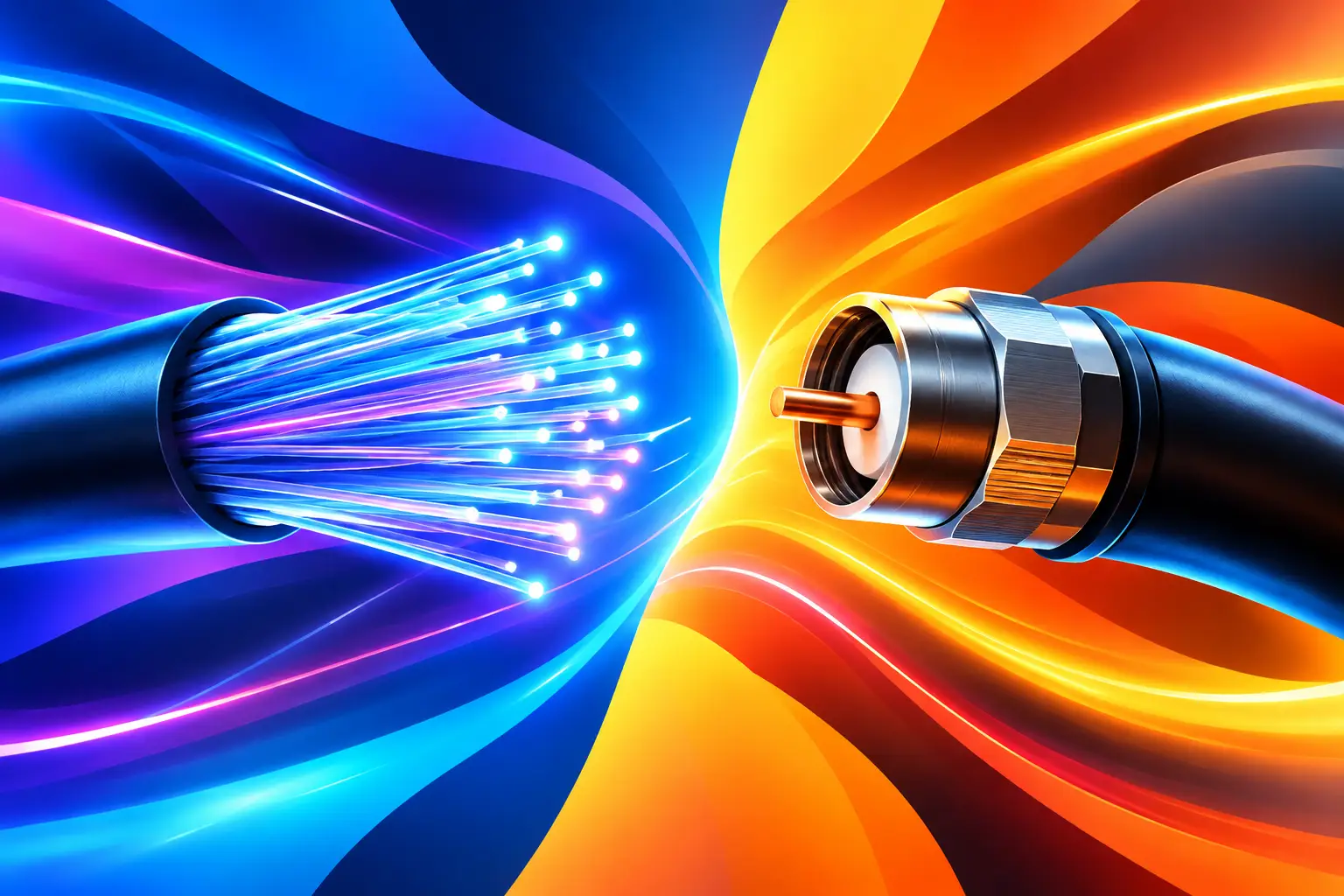
Fiber internet sends data as pulses of light through fiber-optic lines. Cable internet typically uses coaxial cable, the same infrastructure historically used for television service, with modern standards that allow providers to deliver fast broadband.
The clearest difference is capacity. Fiber networks can move much more data over longer distances with less signal loss and are less affected by electrical interference. Cable networks have advanced significantly, and many can provide fast download speeds, but they often rely on shared neighborhood capacity and offer lower upload speeds.
For a household that mainly streams movies, browses, shops, and uses social media, a solid cable plan may feel excellent. For a home office moving large files, a creator uploading video, or a small business relying on cloud tools, fiber can change how work gets done.
Speed Is More Than a Download Number
Providers often promote download speed first because it is easy to understand. It determines how quickly you can stream high-resolution video, download software, load large web pages, and receive files. Cable plans can offer hundreds of Mbps and, in some markets, gigabit-level downloads. That is more than enough for many busy homes.
Fiber also commonly offers gigabit service, but its advantage is usually upload speed. Many fiber plans provide symmetrical speeds, meaning a 1 Gbps plan can deliver close to 1 Gbps for both downloads and uploads. Cable plans are commonly asymmetrical, with strong downloads but much slower uploads.
That gap matters when you send project files, back up photos, host video meetings, upload content, or use cloud-based business systems. A remote employee may not need a gigabit plan, but a fast, consistent upload connection can prevent the awkward pauses and dropped quality that make online collaboration frustrating.
What speed should you actually buy?
A single user with light needs may be comfortable around 100 Mbps. A household with several streamers, gamers, students, and remote workers may benefit from 300 to 500 Mbps or more. Gigabit service becomes especially compelling when many devices are active at once or when large uploads are a routine part of work.
Do not choose based on the biggest number alone. Consider upload speed, data caps, modem or router fees, contract terms, and the reliability record of the provider in your neighborhood.
Reliability and Latency Can Shape the Experience
Fiber typically has an edge in reliability because light-based signals are less vulnerable to interference and the network architecture often provides dedicated capacity closer to the customer. It can also offer lower latency, which is the delay between sending a request and receiving a response.
Low latency is valuable for competitive gaming, video calls, remote desktop access, financial platforms, and cloud applications. A connection may advertise high speed yet still feel sluggish if latency is high or varies throughout the day.
Cable can still perform very well. Modern cable infrastructure has improved dramatically, and many customers experience dependable service for everyday use. The trade-off is that cable bandwidth may be shared among nearby homes. During peak evening hours, local congestion can reduce performance in some areas.
This is why neighborhood research matters more than broad national claims. Ask nearby residents about evening slowdowns, outage frequency, and customer support. Two addresses a few blocks apart can have very different experiences with the same provider.
Availability Is Often the Deciding Factor
Fiber may be the technology leader, but it is not available everywhere. Building fiber networks requires major construction, permits, and investment. Availability is strongest in select cities, newer developments, and areas targeted by provider expansion programs.
Cable, by contrast, reaches a far larger share of US homes. If fiber is unavailable, cable is often the strongest wired alternative and a meaningful upgrade over older DSL services. In rural areas, the choice may also include fixed wireless or satellite options, each with its own performance and pricing trade-offs.
If fiber has recently arrived in your area, check whether the service reaches your specific building or unit. A provider may advertise fiber across a city while only serving certain streets. Apartment residents should also ask whether their building has the required internal wiring and whether management has an exclusivity agreement with another provider.
Cost: Compare the Full Monthly Bill
Cable is frequently the lower-cost option at introductory pricing, particularly where providers bundle internet with mobile or television services. Fiber pricing can be competitive, especially when a provider is expanding and trying to attract early customers. Neither technology is automatically the bargain.
Look beyond the promotional rate. A plan that appears inexpensive can rise sharply after the first year. Equipment rental, installation, taxes, data overage charges, and early cancellation fees can reshape the real cost.
Fiber plans are often praised for straightforward pricing and unlimited data, but policies vary. Cable providers may also offer unlimited data or include it with certain tiers. Read the plan details before assuming that one network type has better terms.
For small businesses, the calculation should include the cost of downtime. Paying more for a dependable fiber connection, faster uploads, or a business-grade support option may be justified if internet access supports sales, customer service, payments, or remote operations.
When Fiber Is the Better Choice
Choose fiber when it is available at a reasonable price and your household or business depends on high uploads, low latency, and consistent performance. It is particularly well suited to creators, remote teams, cloud-heavy businesses, serious gamers, and homes with many connected devices.
Fiber is also a forward-looking choice. As video quality rises, cloud services expand, and homes add connected cameras, appliances, and entertainment systems, the extra capacity can offer more room to grow. That does not mean everyone needs the fastest tier. Even an entry-level fiber plan can deliver a strong foundation.
When Cable Is the Smarter Buy
Cable makes sense when fiber is unavailable, substantially more expensive, or unnecessary for your usage. A quality cable plan can comfortably handle 4K streaming, video calls, online classes, smart devices, and everyday gaming for most households.
It can also be the practical choice for renters or budget-focused users who want broad availability and a fast setup. If your uploads are occasional and local cable service has a good reputation, paying a premium for fiber may not produce a noticeable daily benefit.
The key is to avoid treating cable as outdated. The technology remains a major part of US broadband and continues to evolve. Its limits are real, especially around upload capacity and local congestion, but its value can be excellent.
How to Make the Final Decision
Start by entering your address with every available provider, then compare plans at the same speed tier. Check the advertised upload speed rather than assuming it. Review pricing after promotions end, data limits, equipment requirements, and customer feedback from people nearby.
If you work from home, test your current connection during the hours you actually work. Notice whether video calls degrade, uploads stall, or latency spikes while others stream. Those observations are more useful than a single speed test taken early in the morning.
Technology choices work best when they match real behavior. Fiber can empower homes and businesses with exceptional capacity, while cable can deliver a capable, cost-conscious connection. Choose the service that removes friction from the way you live and work now, then leaves enough headroom for what comes next.