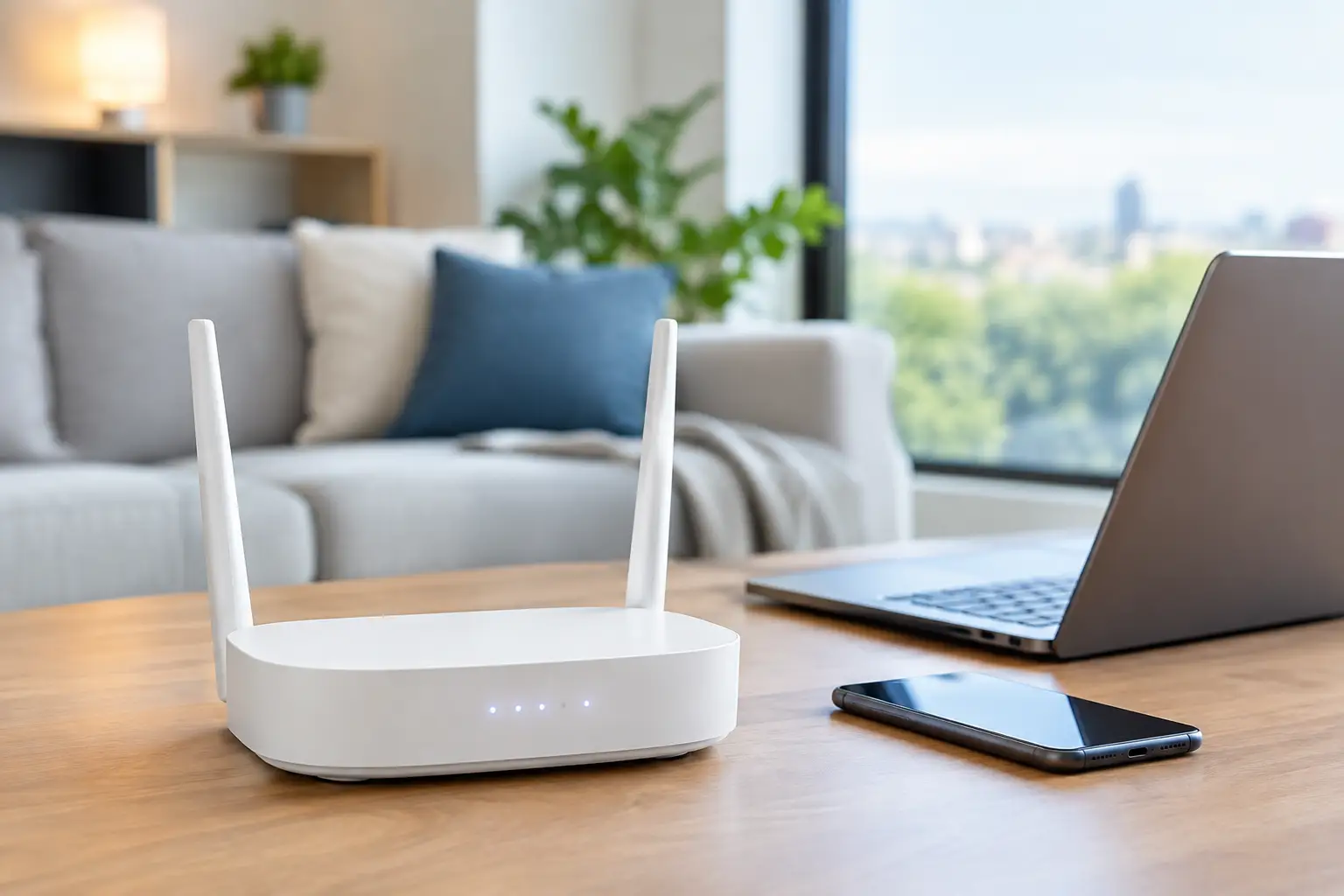
The broadband bill arrives, the promotional rate has expired, and the familiar question returns: is there a better way to get online at home? For many households, choosing to buy 5G home internet is no longer a futuristic experiment. It is a realistic alternative to cable, particularly where fiber is unavailable, installation is difficult, or a simpler monthly plan is appealing.
5G home internet uses the same cellular networks that connect modern smartphones, but it delivers service through a dedicated gateway inside your house or apartment. That gateway connects your devices through Wi-Fi, replacing a traditional cable or DSL line. The idea is straightforward. The buying decision is not. Performance can vary significantly by address, carrier capacity, building layout, and even the location of the gateway near a window.
Why 5G Home Internet Is Gaining Ground
The strongest appeal is simplicity. Traditional broadband often involves appointments, cables, equipment rental fees, confusing bundles, and pricing that changes after an introductory period. Fixed wireless 5G plans tend to offer a cleaner proposition: a gateway, a monthly service fee, and no technician visit in many cases.
For renters, frequent movers, and households that want to get online quickly, that flexibility matters. Plug in the equipment, follow the provider app instructions, and you may have working Wi-Fi the same day. It also gives consumers more leverage in markets where one cable company has long dominated local options.
The technology is advancing because wireless carriers have invested heavily in 5G spectrum and network capacity. Mid-band 5G, in particular, has become central to home internet expansion because it can balance coverage and speed better than ultra-high-frequency signals that have limited range. For consumers, the result is more addresses qualifying for service than in the early days of 5G.
Still, availability is not the same as a guarantee of excellent performance. A provider may offer 5G home internet at your address because the signal reaches the area, while the real-world experience can still depend on local network demand. That is why the best purchase decision begins with your home, not an advertised maximum speed.
What to Check Before You Buy 5G Home Internet
Start with the address check, but do not stop there. Ask what typical download and upload speeds customers receive at your location, not merely the fastest speed the network can theoretically deliver. Download speed affects streaming, browsing, large file transfers, and game downloads. Upload speed matters for video calls, cloud backups, remote work, security cameras, and creators sending content to clients or platforms.
Latency deserves equal attention. It measures the delay between sending a request and receiving a response. For everyday browsing and streaming, slightly higher latency may be barely noticeable. For competitive online gaming, live video production, remote desktop work, or highly responsive business applications, it can make a difference. Fiber usually has an advantage here, while 5G can still be perfectly capable for most homes.
Also read the plan terms carefully. Many fixed wireless offerings advertise unlimited data, but network-management policies may apply during periods of congestion. In plain language, a busy local network can affect your speeds even when you have not exceeded a data cap. Ask whether the plan has priority levels, video-streaming limits, equipment charges, activation fees, or a price increase after a promotional period.
The gateway itself is part of the experience. Some carriers include it at no extra charge, while others structure the offer differently. Check whether the device supports newer Wi-Fi standards, how many wired Ethernet ports it has, and whether you can use your own mesh Wi-Fi system. A strong 5G signal is only half the equation if the Wi-Fi inside a large home cannot reach bedrooms, offices, or smart devices reliably.
Coverage Is More Personal Than a Coverage Map
Coverage maps are useful, but they are broad estimates. A house on one side of a street can perform differently from a house on the other side because of terrain, trees, nearby buildings, construction materials, and the distance to cellular infrastructure.
Placement can transform the result. A gateway often performs best near an exterior wall or window facing the strongest signal direction. Moving it a few feet can improve signal quality, although it should not be placed in direct sun or behind dense objects. Before settling on a permanent location, test speed and reliability in several spots at different times of day.
Apartment dwellers should be especially practical. Concrete, metal, tinted glass, and interior placement can weaken cellular signals. A higher floor may help, but there is no universal rule. If the provider offers a trial period or simple return policy, use it as a real-world test rather than assuming the service will behave like a neighbor’s connection.
5G Home Internet vs. Cable and Fiber
5G home internet is not automatically better than cable or fiber. It solves different problems.
Fiber remains the gold standard where available at a competitive price. It typically provides the most consistent speeds, low latency, and strong upload performance. Households with multiple remote workers, serious gamers, creators moving large files, or businesses operating from home may find fiber worth keeping.
Cable remains widely available and can provide fast download speeds, but pricing, upload performance, and neighborhood congestion vary. It may be a sensible choice for homes that need high download capacity and already have reliable service.
5G home internet stands out when it is cheaper, easier to install, or meaningfully more reliable than an aging cable or DSL connection. It can be particularly compelling for light-to-moderate users, streaming-focused households, students, renters, and people in areas with limited wired broadband competition. It can also serve as a backup connection for a home office or small business that cannot afford to lose connectivity.
A useful rule is to compare the experience you need rather than the biggest number on an advertisement. A household that streams in 4K, holds video calls, uses smart-home devices, and browses on several phones may be satisfied with stable moderate speeds. A household transferring massive media files every day has different requirements.
The Cost Question Goes Beyond the Monthly Price
The headline price can make 5G home internet look like an easy win, especially when the gateway is included and there is no annual contract. But compare the full picture: taxes and fees, autopay requirements, mobile-bundle discounts, equipment replacement policies, and the price after any introductory offer.
If you are switching from cable, calculate what you currently pay after all rental fees and add-ons. If 5G service saves money but delivers inconsistent evening performance, the lower bill may or may not justify the trade-off. For a household with one casual streamer, it might. For a remote team working from home, a connection problem during peak hours can cost more than the monthly savings.
For small-business owners, separate personal convenience from operational need. A low-cost 5G plan can be a smart backup line, but do not assume a consumer plan includes the support commitments, static IP options, or uptime expectations that certain business workflows require.
A Smarter Way to Test the Switch
The best approach is to avoid canceling your current connection on day one if your budget allows. Run 5G home internet alongside your existing service for a short evaluation period. Test it in the morning, afternoon, and evening. Stream video on multiple devices, join work calls, upload files, connect gaming systems, and see how the gateway handles your actual routine.
Pay attention to consistency rather than chasing a single impressive speed-test result. A connection that reliably meets your needs is more valuable than one that posts exceptional numbers at noon but struggles when your neighborhood is online after work.
Take notes on signal placement, Wi-Fi range, upload performance, and any interruptions. This turns a marketing choice into a practical technology decision grounded in your household’s habits.
5G is giving more Americans a credible path away from old broadband assumptions. If the coverage is strong at your address and the terms are clear, it can be an empowering change. Let your real usage make the call: the right connection is the one that quietly supports work, entertainment, and the next opportunity without becoming another problem to manage.